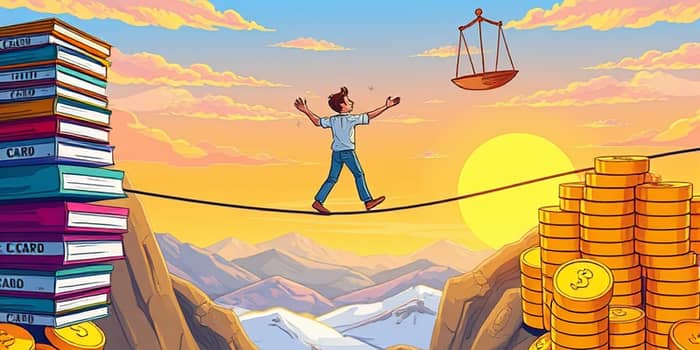
As we step into 2026, the financial landscape for many Americans feels like a precarious walk on a tightrope.
High-interest credit card debt looms large, threatening to pull households into a cycle of stress and uncertainty.
Yet, amid this tension, there is hope as debt levels stabilize and interest rates begin to fall.
This article will guide you through the data, emotions, and practical steps to find balance.
You are not alone in this struggle, and with the right strategies, you can secure your financial future.
The Current Debt Landscape in 2026
Total U.S. credit card debt stands at a staggering $1.233 trillion, a figure that underscores the widespread challenge.
On average, households carry just under $11,000 in credit card debt, with per-borrower amounts nearing $7,000.
However, there are signs of stabilization, as balances are expected to grow by the smallest amount since 2013.
This shift signals a potential turning point post-pandemic, offering a glimmer of relief.
- About 46% of adult cardholders carried a balance at least one month in the past year.
- Delinquency rates have decreased for five straight quarters, now at 2.98% for balances 30+ days late.
- Lower-income households are increasingly reliant on credit, highlighting economic disparities.
- A common mistake is making partial minimum payments, which can damage credit scores.
These statistics paint a picture of resilience but also caution.
Understanding this context is the first step toward taking control of your finances.
Understanding Interest Rate Dynamics
Interest rates on credit cards are declining, with the Federal Reserve's rate cuts in late 2025 paving the way.
The average APR for all credit cards is now 20.97%, down from recent highs, while cards accruing interest average 22.30%.
This slight drop offers a window of opportunity for those struggling with debt.
New credit card offers have APRs as low as 20.18% and as high as 27.39%, with an average of 23.79%.
This table illustrates the varied options available, emphasizing the need for careful selection.
Falling rates make 2026 an ideal time to reassess and strategize your debt payoff plans.
The Math: Savings vs. Debt Payoff
The gap between savings yields and credit card APRs is a critical factor in financial planning.
High-yield savings accounts offer returns of 4-5%, while credit card debt often carries APRs of 20% or more.
This 15-16% spread means that saving your way out of debt is virtually impossible without addressing the debt first.
Prioritizing debt payoff over savings can save you thousands in interest over time.
- Debt forgiveness strategies are risky and may not outweigh the high costs of interest.
- Focus on paying off high-interest debt before building substantial savings.
- Even small extra payments can significantly reduce the total interest paid.
- Consider using windfalls, like tax refunds, to tackle debt aggressively.
This mathematical reality demands a shift in mindset toward immediate debt reduction.
By doing so, you free up future income for savings and investments.
Consumer Sentiment and Financial Goals
Consumer pessimism is at a high, with 32% expecting their personal finances to worsen in 2026.
Inflation drives this outlook, affecting 78% of those who are pessimistic about their financial future.
Despite this, many Americans are setting ambitious goals to improve their financial health.
- Paying down debt is a top priority for 19% to 36% of Americans, especially among older adults.
- Increasing income is a goal for 14%, highlighting the desire for more financial flexibility.
- Building emergency savings is targeted by 13%, underscoring the need for safety nets.
- Better budgeting is aimed for by 12%, showing a commitment to mindful spending.
These goals reflect a collective yearning for stability and control.
Aligning your actions with these priorities can lead to meaningful progress.
Higher-income households tend to have stronger savings, while lower-income groups face more credit reliance.
Tailoring strategies to your income level is essential for effective financial management.
Economic Pressures and Household Finances
Economic factors like inflation continue to strain household budgets, even as it has cooled from peaks.
Essentials such as groceries have risen 25-30% since 2020, with housing, insurance, and healthcare costs surging.
This cumulative pressure makes balancing debt and savings more challenging than ever.
Household finances are stabilizing in some areas, but job market uncertainties add to the stress.
- Savings buffers are still elevated compared to 2019 but are gradually declining.
- Wage growth is uneven, benefiting some while leaving others behind.
- Credit balances are leveling off, offering a chance to catch up financially.
- The risk of labor market slowdowns could impact lower-income households the most.
Navigating these pressures requires resilience and adaptability.
By staying informed, you can make decisions that protect your financial well-being.
Strategic Approaches to Balance
Developing a balanced strategy involves both short-term actions and long-term planning.
Start by assessing your debt, focusing on high-interest credit cards first to minimize interest costs.
Make full minimum payments or more to avoid late fees and credit damage.
Use the declining interest rates in 2026 to refinance or consolidate debt if possible.
- Create a budget that allocates funds to both debt repayment and emergency savings.
- Consider balance transfer cards with low introductory APRs to reduce interest temporarily.
- Automate payments to ensure consistency and avoid missed deadlines.
- Seek professional advice if debt becomes overwhelming, such as from credit counselors.
- Monitor your credit score regularly to track improvements and identify issues early.
These steps can transform financial stress into a manageable journey.
Remember, small, consistent efforts lead to significant changes over time.
The Broader Picture of U.S. Debt
Credit card debt is just one piece of the larger U.S. debt puzzle, which exceeds $18 trillion across all categories.
Mortgages make up about 70% of this total, with auto loans and student loans adding substantial burdens.
For millennials, over 50% have debt that exceeds their retirement savings, highlighting intergenerational challenges.
This broader context reminds us that financial health is interconnected with economic trends.
By understanding the full scope, you can better prioritize your own debt and savings goals.
Embrace the journey with patience and perseverance, knowing that every step counts.
References
- https://www.khou.com/article/money/credit-card-balance-interest-rates-2026/285-0c38cbe6-d573-4bcf-b16a-c59afe30c9ac
- https://www.lendingtree.com/credit-cards/study/credit-card-debt-statistics/
- https://institute.bankofamerica.com/economic-insights/household-spending-trends.html
- https://www.bankrate.com/banking/financial-outlook-survey/
- https://www.youtube.com/watch?v=xravYq8n6vQ
- https://www.cbsnews.com/news/is-credit-card-debt-forgiveness-worth-pursuing-in-2026/
- https://www.investmentnews.com/practice-management/ambitious-but-practical-how-americans-are-setting-their-2026-financial-goals/263679