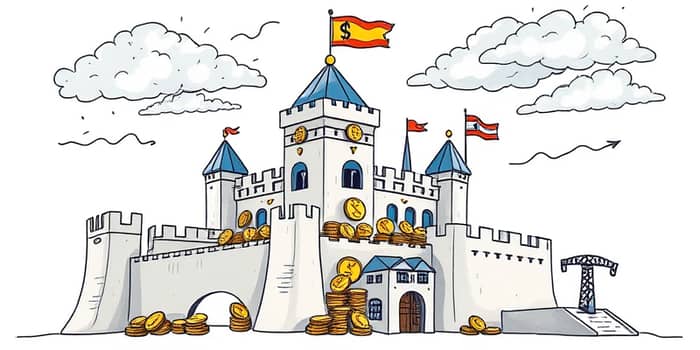
In today's volatile economic landscape, creating wealth demands more than aggressive growth; it requires a security-first approach to investing. The lessons from past downturns, like the 2022 bear market, underscore the need to prioritize protection over pure profit. As 2026 approaches, the idea of a 'financial fortress' evolves from metaphor to essential strategy, guiding you toward resilient and sustainable wealth.
This method emphasizes calculated resilience in portfolio management, ensuring your assets can withstand shocks from inflation, policy shifts, and economic cycles. By adopting defensive tactics, you build a balance sheet that acts as a bulwark against unforeseen risks, mirroring the 'fortress balance sheets' that thrived during turbulent times.
The core principle is shifting from unbridled optimism to stability through diversified assets. In this article, we'll explore step-by-step how to construct your financial fortress, offering actionable insights and inspiration to secure your future.
Understanding the Fortress Metaphor
The term 'fortress' in finance describes a portfolio designed with defensive strategies at its heart. It focuses on safeguarding your principal while allowing for measured growth. Inspired by the 2022 market corrections, where defensive assets outperformed, this model prepares you for the mid-cycle transition expected in 2026.
Key components include low debt and high return on equity, which are hallmarks of quality investments. By embracing this metaphor, you align financial goals with long-term security rather than short-term gains, fostering a mindset of preparedness.
Pillars of Your Financial Fortress: Core Strategies
To build a robust financial fortress, start with these foundational strategies that blend offense with heavy defense. They ensure you're ready for various scenarios, from market booms to downturns.
- Real estate investment: Focus on income-generating properties and use low-interest credit wisely to leverage opportunities.
- Stock market engagement: Mix growth stocks from high-growth companies with value stocks that have strong fundamentals; consider ETFs for easy diversification.
- Cryptocurrency allocation: Approach with caution, pairing investments with thorough education to manage high-risk, high-reward potential.
- Side businesses and hustles: Boost your income aggressively through new ventures or skill enhancements, creating additional revenue streams.
- Retirement accounts maximization: Contribute fully to 401(k)s and IRAs to benefit from tax advantages and compounding over time.
- Mutual funds, ETFs, and bonds: Use these as core vehicles to create a balanced and diversified portfolio base.
- Alternative defensives: Include assets like infrastructure and commodity-linked equities to hedge against inflation and economic shifts.
Each strategy contributes to a diversified and resilient asset base, crucial for weathering market storms and achieving long-term security.
Fortifying Against Risks: Essential Techniques
Risk management is the cornerstone of a financial fortress. Protect your principal first by implementing these techniques that shield against volatility and uncertainty.
- Diversification across asset classes: Spread investments in stocks, bonds, real estate, and alternatives to minimize exposure to any single risk.
- Regular portfolio reviews and rebalancing: Align your allocations with your risk tolerance, financial goals, and investment horizon, adjusting as needed.
- Use of stop-loss orders and insurance: Add layers of protection against market fluctuations and unforeseen events to preserve capital.
- Building emergency funds and safety nets: Maintain liquid assets and diverse income streams to handle emergencies without dipping into long-term investments.
- Evaluating risk tolerance periodically: Factor in personal circumstances and avoid over-leverage to prevent financial strain and ensure sustainability.
Additionally, consider beyond the traditional 60/40 portfolio by increasing alternatives, as inflation and rate risks can undermine standard models in shifting economies.
Navigating the 2026 Economic Landscape
The year 2026 is poised for a mid-cycle transition, moving from growth euphoria to defensive reality in investing. Key factors to watch include the expiration of Jerome Powell's term as Fed Chair in May 2026 and sustained inflation rates around 3.5%-3.75%.
To prepare, monitor economic indicators and build buffers diligently. Inflation protection should be a priority, with investments in assets that historically outperform during such periods, like real estate and commodities. This proactive stance helps mitigate the impact of rising prices.
Structural shifts, such as the end of 'easy money' eras, mean prioritizing high ROE and low debt companies. This aligns with the 'Quality Factor' expected to dominate in defensive markets, ensuring your portfolio remains robust against economic headwinds.
Practical Steps for Fortress Building
Implementing your financial fortress requires actionable steps that translate strategy into daily habits. Here are best practices to follow for sustained success.
- Create a detailed financial plan: Outline your goals, assets, liabilities, and income; consider using software or advisors for precision and clarity.
- Review and adjust quarterly or annually: Adapt to market changes and personal life events to keep your strategy relevant and effective.
- Seek professional advice when needed: Certified planners can navigate complex landscapes and optimize your approach for maximum security.
- Focus on controllables: From liquidity management to spending habits, concentrate on areas you can influence directly to reduce stress.
- Save 10% more monthly: Simple cuts, like dropping a streaming service, can free up funds for investment, compounding over time.
- Embrace frugality and smart budgeting: Minimize expenses to fuel your investment engine without compromising quality of life, fostering sustainable growth.
Legal aspects, such as forming LLCs for tax benefits, and wise use of credit leverage for real estate, are also crucial components that add layers of protection and efficiency.
Embracing Innovation and Trends
Stay ahead by incorporating emerging trends into your fortress, leveraging technology and social movements for enhanced resilience. These elements can provide new opportunities for growth while maintaining security.
- Technological advancements: Blockchain, AI, and fintech tools make investing more accessible and efficient, streamlining portfolio management.
- Consumer and social shifts: Sustainable products and socially responsible investments align with values and can offer stable returns in evolving markets.
- Lessons from successful investors: Warren Buffett's principles of value and patience underscore the importance of long-term thinking in fortress building.
For instance, the mRNA/biotech sector shows how diversified pipelines can create financial fortresses, reinvesting profits for resilience and adapting to market changes effectively.
Cultivating a Resilient Mindset
Building wealth isn't just about numbers; it's about mindset. Develop coping strategies and continuous learning habits to sustain your financial journey through ups and downs.
- Adopt a long-term perspective: Avoid stress by focusing on gradual progress rather than short-term fluctuations, keeping emotions in check.
- Diversify your income streams: Side hustles and skill upgrades provide safety nets and growth opportunities, reducing reliance on single sources.
- Engage in continual learning: Take courses and network to stay updated on market trends and personal finance skills, empowering informed decisions.
As self-made millionaire Smolinski advises, delay gratification upfront for long-term rewards. This mindset fuels the discipline needed for fortress building, turning sacrifices into future security.
Conclusion: Securing Your Future
Constructing your financial fortress is a journey of strategic planning and persistent effort. By prioritizing security first, you not only protect your wealth but also create a foundation for sustainable growth that endures through economic cycles.
Remember, the goal is to own types of risk that you can manage, turning potential threats into opportunities for resilience. As 2026 approaches, let this guide inspire you to take control, implement these strategies, and build a legacy of financial security that stands the test of time.
References
- https://www.thelandgeek.com/blog-wealth-building-strategies-2026/
- https://markets.financialcontent.com/ibtimes/article/marketminute-2025-12-18-the-2022-playbook-returns-why-investors-are-building-a-fortress-2026
- https://www.businessinsider.com/how-to-build-wealth-in-2026-financial-independence-saving-investing-2026-1
- https://www.kiplinger.com/retirement/retirement-planning/forget-market-forecasts-focus-on-these-goals-for-financial-success
- https://www.ad-hoc-news.de/boerse/news/ueberblick/the-mrna-rivalry-in-2026-a-tale-of-financial-fortress-versus-speculative/68475434
- https://www.csis.org/analysis/securing-us-interests-2026-usmca-review-building-fortress-north-america
- https://www.nasdaq.com/articles/3-lessons-investing-legend-warren-buffett-carry-2026