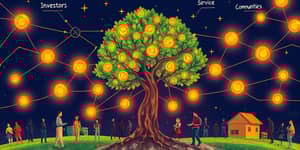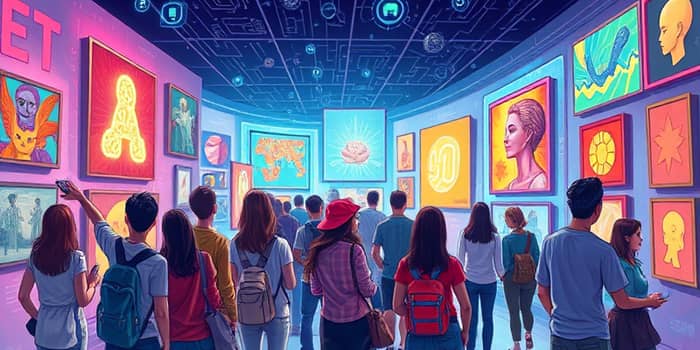
In an era where the intangible becomes tangible, digital art and Non-Fungible Tokens (NFTs) are revolutionizing how we perceive value and ownership. The global NFT market is projected to soar, offering unprecedented opportunities for creators, collectors, and investors alike.
This transformation is driven by blockchain technology enabling provable scarcity, allowing digital assets to be uniquely owned and traded. From niche beginnings to a multi-billion dollar industry, the journey reflects a shift towards digital empowerment.
As we delve into this new frontier, understanding the market dynamics, key segments, and practical implications is crucial for anyone looking to participate. The democratization of art creation and ownership is at the heart of this movement, breaking down traditional barriers.
Market Growth and Projections
The NFT market has experienced explosive growth, with projections indicating sustained expansion. According to recent data, the global NFT market is expected to grow by USD 147.24 billion from 2021 to 2026 at a compound annual growth rate (CAGR) of 35.27%.
This growth is largely fueled by the rising demand for digital artworks, though market uncertainties may pose challenges. By 2024, the market size was USD 26.41 billion, and it is projected to reach USD 222.79 billion by 2032, showcasing the long-term potential.
Key drivers include the integration of NFTs in gaming, art, and virtual real estate. For instance, the Americas are expected to generate significant revenue, highlighting regional adoption trends.
- Global NFT market cap rose from $100 million in 2020 to $25 billion in 2021, then stabilized at $4.8 billion in 2024 after a correction.
- Digital art market is projected to grow from USD 7.24 billion in 2025 to USD 30.69 billion by 2035, driven by NFT adoption and technological advancements.
- NFT-as-a-Service (NFaaS) market is set to expand rapidly, from USD 2.7 billion in 2025 to USD 67.63 billion by 2035.
Key Segments and Applications
NFTs are not monolithic; they span various applications, each with unique growth trajectories. The gaming segment dominates, accounting for 35-40% of the total NFT market and over 50% of transaction volume in 2024.
Art NFTs hold a significant share, around 20-25% of revenue, driven by digital galleries and auction houses. Other segments include collectibles, utilities, and metaverse applications, which are gaining traction through celebrity endorsements and virtual experiences.
To better understand the landscape, here is a table summarizing key NFT applications:
Digital assets dominate the revenue, with over 70% share in 2023, emphasizing the shift towards intangible ownership. Personal collections in digital art are growing faster, thanks to NFT integration.
Technological Enablers
The backbone of this revolution is technology. Blockchain provides indivisible and verifiable ownership, making digital items scarce and valuable beyond mere images.
Artificial Intelligence (AI) is enhancing creation processes, enabling generative art that pushes creative boundaries. Augmented and Virtual Reality (AR/VR) offer interactive experiences, such as virtual galleries where art can be explored in immersive settings.
Platforms like OpenSea, which holds 60-70% market share, and curated sites like Foundation, facilitate easy minting and trading. These tools lower entry barriers for artists and collectors.
- Blockchain ensures provenance and scarcity, key for digital ownership.
- AI drives complex art generation, expanding artistic possibilities.
- AR/VR creates engaging virtual exhibitions, enhancing art appreciation.
- NFaaS platforms simplify NFT creation, empowering creators without technical expertise.
Economic and Cultural Shifts
The rise of NFTs is intertwined with broader economic trends. The creator economy is flourishing, as artists can now bypass traditional gatekeepers like galleries and sell directly to consumers.
This democratization allows for global reach, enabling artists from all backgrounds to monetize their work. Royalties from secondary sales provide ongoing income, a game-changer for digital creators.
Collector psychology is evolving, with younger generations, particularly Gen Z and millennials, driving demand. They view digital assets as legitimate investments and expressions of identity.
Brands and corporations are also jumping in, tokenizing intellectual property and creating exclusive collectibles for marketing and engagement. This institutional adoption signals maturation and legitimacy.
- Direct-to-consumer models empower artists with control and revenue.
- Fractional ownership makes high-value art accessible to more people.
- Gen Z collectors are increasing digital art spending, shaping market trends.
- Celebrity endorsements and social media amplify NFT visibility and sales.
Regional Insights
Adoption varies globally, with North America leading in digital art and NFT markets, holding about 40% of the global share. This is due to strong consumer demand, technological infrastructure, and cultural acceptance.
Asia Pacific is experiencing exponential growth, especially in countries like South Korea and Japan, driven by gaming and blockchain initiatives. Latin America sees digital artists leveraging platforms to reach international audiences.
Europe and the Middle East are notable for art NFT growth through galleries and luxury brand collaborations, indicating diverse regional dynamics.
- North America: Dominant due to tech-savvy populations and investment.
- Asia Pacific: Rapid growth via gaming and government support.
- Latin America: Artists gaining global monetization opportunities.
- Europe/Middle East: Art-focused adoption with institutional backing.
Historical Context and Evolution
NFTs have come a long way from their early days in 2017 as niche crypto collectibles. The boom in 2021 saw the market cap peak at $25 billion, but a correction in 2022 led to stabilization, weeding out speculative projects.
This maturation phase is characterized by a focus on fundamental value, such as artistic merit and utility, rather than mere speculation. Digital art's share in collections has risen, signaling growing acceptance among traditional art collectors.
The evolution reflects a market cycle from hype to sustainability, with institutions like museums and auction houses now embracing NFTs, adding credibility.
Challenges and Maturation Indicators
Despite the optimism, challenges remain. Market volatility and regulatory uncertainties can hinder growth, especially in developing regions. However, these issues are part of the maturation process, leading to more structured ecosystems.
Indicators of maturity include increased institutional adoption, such as galleries and corporations entering the space, and discussions around regulations to protect investors and creators.
The decline in speculative trading has paved the way for projects with real utility and artistic value, ensuring long-term viability. Building trust through transparency is key to overcoming skepticism.
- Volatility post-2021 correction eliminated many speculative ventures.
- Institutional adoption by art houses and brands boosts legitimacy.
- Regulatory frameworks are being discussed to ensure sustainable growth.
- Community-driven platforms foster engagement and quality standards.
Practical Steps for Engagement
For those inspired to join this frontier, here are some practical steps. Artists can start by minting their work on user-friendly platforms like NFaaS offerings, which require minimal technical knowledge.
Collectors should research projects thoroughly, focusing on the artistic value, community, and utility of NFTs. Investing in fractional ownership can be a way to enter high-value markets without large capital.
Staying informed about market trends and technological advancements is crucial. Engaging with communities on social media and platforms can provide insights and opportunities.
- For artists: Use platforms like Foundation or SuperRare for curated exposure.
- For collectors: Diversify investments across gaming, art, and metaverse NFTs.
- For investors: Look for projects with strong fundamentals and active communities.
- For everyone: Educate yourself on blockchain basics and market dynamics.
Embrace the change, and be part of shaping the future of digital ownership. The journey is just beginning, with endless possibilities for creativity and connection. By understanding these dynamics, you can navigate this new frontier with confidence and inspiration.
Digital art and NFTs are not just trends; they represent a fundamental shift in how we create, own, and value culture. As technology evolves, so too will the opportunities, making now the perfect time to explore and engage.
References
- https://www.prnewswire.com/news-releases/non-fungible-token-nft-market-size-to-grow-by-usd-147-24----technavio-301529125.html
- https://www.rootsanalysis.com/digital-art-market
- https://www.researchnester.com/reports/nft-as-a-service-market/7651
- https://www.verifiedmarketresearch.com/product/non-fungible-tokens-market/
- https://www.artbasel.com/stories/digital-art-boom-gen-z-collectors?lang=en
- https://momaa.org/digital-art-and-nft-market-analytics-new-asset-class-performance-and-valuation-frameworks/
- https://www.statista.com/outlook/fmo/digital-assets/nft/americas