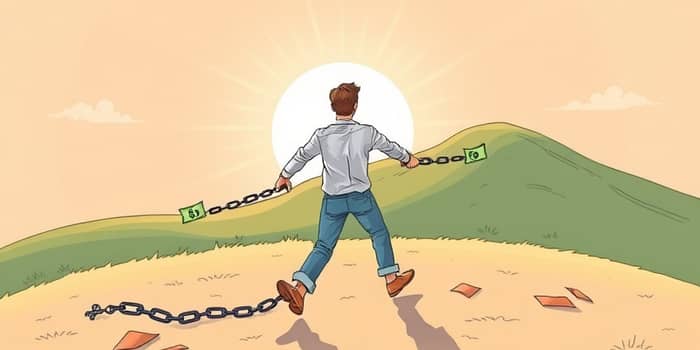
Debt often feels like an inescapable trap, but it can be the start of a powerful transformation.
In today's economy, total US household debt has soared to alarming levels, reaching $18.4 trillion by mid-2025.
This includes $1.21 trillion in credit card balances, which drag many into cycles of high interest.
Yet, hope is on the horizon as 2026 approaches, with consumers prioritizing change and new tools emerging.
This article offers a step-by-step guide to turn financial stress into a journey toward lasting freedom.
The Debt Landscape in 2026: A Snapshot of Challenge and Opportunity
Understanding the current financial climate is crucial for effective action.
The delinquency rate stands at 4.4% of outstanding debt, indicating widespread struggle.
However, early intervention can prevent issues from escalating, as shown in 2026 trends.
Consumers are increasingly focused on proactive measures, with 20% aiming to pay down debt.
Additionally, 59% plan to cut small daily purchases, reflecting a shift toward mindful spending.
- Total household debt: $18.4 trillion
- Credit card debt: $1.21 trillion
- Auto loans: $1.66 trillion
- Student loans: $1.64 trillion
- Delinquency rate: 4.4%
These statistics underscore the urgency but also highlight the potential for positive change.
By 2026, 81% of Americans rely on basic budgeting to stay financially on track.
Digital tools and AI-driven solutions are making it easier to manage debts proactively.
Your 7-Step Liberation Plan: A Roadmap to Financial Freedom
This structured approach transforms overwhelming debt into manageable steps.
First, take inventory of all debts, noting interest rates and minimum payments.
This helps identify high-cost balances that require immediate attention.
Second, build a realistic budget using the 50/30/20 rule for essentials, discretionary spending, and debt repayment.
Tracking expenses frees up cash flow, accelerating your payoff journey.
- Step 1: Take Inventory – List all debts comprehensively.
- Step 2: Build a Budget – Allocate income effectively.
- Step 3: Prioritize Repayment – Choose snowball or avalanche methods.
- Step 4: Consolidate Debts – Simplify into one payment.
- Step 5: Use Balance Transfers – Move to lower interest cards.
- Step 6: Enroll in a DMP – Access nonprofit support.
- Step 7: Boost Income and Seek Help – Explore side hustles and counseling.
Each step is designed to reduce stress and build momentum.
For prioritization, the debt snowball method focuses on smallest balances first for quick wins.
Alternatively, the debt avalanche method targets highest interest rates to save money long-term.
Consolidation can streamline payments, while balance transfers to 0% intro APR cards cut costs significantly.
A Debt Management Plan (DMP) offered by nonprofits can lower rates to 8-10% on average.
This avoids bankruptcy and provides a single, manageable monthly payment.
Real Success Stories: Inspiration from Those Who Triumphed
Hearing from others who have overcome debt fuels motivation and hope.
Matthew and Kendall paid off $20,264 in 40 months through a DMP.
They saved $5,000 in interest and avoided a second bankruptcy, improving their family's life.
Samantha cleared $45,000 of credit card debt in 5 years, reducing her monthly payments by $350.
This freed up funds for savings and retirement, showcasing long-term benefits.
- Matthew & Kendall: $20,264 paid, 40 months, saved $5,000 interest.
- Samantha: $45,000 paid, 5 years, monthly payments dropped $350.
- Kathy: $40,000 paid, 3 years, used tax refunds and budget tweaks.
- Sharise N.: $14,194 paid, 13 months, found relief during job loss.
- Annemie L.: $73,020 paid, under 1 year, cut payments from $2,000 to $1,200 monthly.
Common themes in these stories include rate reductions, consolidation, and emotional relief.
As Kathy shared, 'Hope is never lost,' emphasizing the mindset shift crucial for success.
These examples prove that with consistency, debt freedom is achievable for anyone.
Tools and Mindset for 2026: Building Resilience and Efficiency
Leverage modern resources to stay on track and maintain progress.
Budget apps and online trackers help monitor spending in real-time, making adjustments easy.
Automated payments ensure you never miss due dates, protecting your credit score.
Professional credit counseling provides education and support, boosting adherence to plans.
In 2026, trends like AI-driven reminders and one-click payment plans are becoming standard.
- Budget apps for daily tracking and alerts.
- Automated payment systems to avoid late fees.
- Credit counseling services for personalized guidance.
- Digital tools from providers like SECS for seamless management.
- Mindful spending practices to curb impulse buys.
Shifting to a proactive mindset is essential, viewing debt as a temporary challenge.
This mental change reduces stress and fosters long-term financial health.
Avoiding Common Pitfalls: Steer Clear of Setbacks
Recognizing and avoiding mistakes can keep your liberation plan on course.
Making only minimum payments prolongs debt and increases total interest paid.
Taking on new debt during repayment sets back progress and adds to the burden.
Ignoring professional counseling can lead to missed opportunities for better terms.
- Avoid making only minimum payments on credit cards.
- Do not accrue new debt while repaying existing balances.
- Seek help early from nonprofit agencies.
- Use hardship programs if financial situations change.
- Engage creditors proactively to negotiate terms.
Early engagement with creditors, as seen in 2026 trends, can yield higher recovery rates and fewer escalations.
Staying vigilant against these pitfalls ensures steady advancement toward freedom.
Sustaining Your Financial Freedom: Life After Debt
Once debt-free, focus shifts to building a secure and prosperous future.
Establish an emergency fund to prevent relapse into debt during unexpected events.
Contribute to retirement savings and consider home improvements to enhance quality of life.
Financial literacy through continued education ensures long-term stability and growth.
This table illustrates the transformative impact of following the liberation plan.
Remember, debt management plans are key, with the majority of participants repaying in full through consistency.
As industry experts note, sticking to the plan yields success, turning debt into a distant memory.
Your journey from debt to destiny begins with a single, committed step today.
Embrace the tools, stories, and strategies shared here to chart a course toward lasting financial empowerment.
References
- https://www.southeastclientservicesinc.com/blog/effective-debt-management-strategies
- https://www.greenpath.com/client-stories/a-debt-management-success-story/
- https://www.optiosolutions.com/whats-changing-in-us-debt-collections-in-2026-and-why-it-matters-now-for-creditors/
- https://www.consumercredit.com/about-us/client-stories/conquering-credit-card-debt-with-accc-samanthas-success/
- https://moveo.ai/blog/debt-recovery-and-collections-management
- https://www.moneymanagement.org/iimproving-lives/stories/kathy-d
- https://www.intuit.com/blog/innovative-thinking/2026-financial-forecast-mindful-stress/
- https://www.accrediteddebtrelief.com/blog/5-debt-success-stories-how-real-people-paid-off-thousands-in-debt-through-debt-consolidation/
- https://www.investmentnews.com/practice-management/ambitious-but-practical-how-americans-are-setting-their-2026-financial-goals/263679
- https://www.checkbook.org/national/how-to-pay-off-debt/
- https://bridgeforce.com/insights/financial-services-trends-what-leaders-should-watch-in-2026/
- https://creditcounselingcenter.org/jennifers-success-story-paid-off-30000-in-debt/
- https://www.experian.com/blogs/ask-experian/steps-to-get-out-of-debt/
- https://komonews.com/news/consumer/success-stories-show-how-credit-counseling-helps-americans-conquer-overwhelming-debt
- https://www.aspeninstitute.org/blog-posts/real-stories-of-unmanageable-debt/