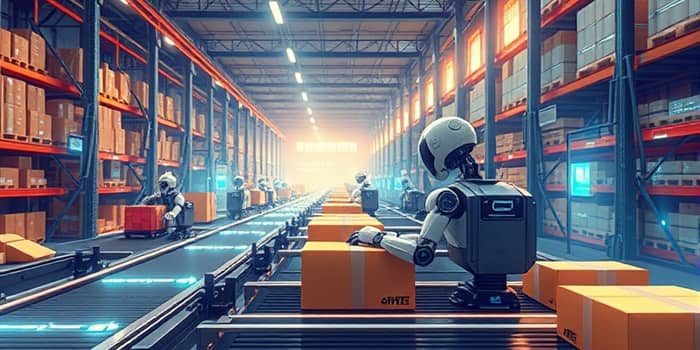
In an age where customer expectations soar and operational costs rise, the world of retail is poised at a pivotal juncture. The traditional returns process—laden with manual checks, slow logistics, and mounting expenses—is being reimagined by the union of robotics and artificial intelligence. This groundbreaking transformation is not merely a technological upgrade; it represents a fundamental shift toward speed, sustainability, and superior customer experiences.
The Return Revolution: Challenges and Opportunities
Every year, retailers grapple with millions of returns that ripple across supply chains, warehouses, and storefronts. These cycles not only strain labor resources but also erode profit margins and fuel environmental concerns. As global e-commerce sales surge, return volumes follow suit—by some estimates, up to 30% of online purchases find their way back. The stakes have never been higher.
Yet within this challenge lies an unprecedented opportunity. By infusing automation into returns processing, retailers can unlock agility, accuracy, and cost savings. The dawn of automated returns heralds a new era where misrouted packages, delayed refunds, and manual errors become relics of the past.
Robotics and AI Join Forces
At the heart of this revolution are Autonomous Mobile Robots (AMRs) that glide through warehouses without fixed guidepaths, sorting and transporting returned items with unerring precision. Projections indicate a 12× growth in AMR deployments by the end of 2026, with organizations achieving under 24 months payback and ROI surpassing 250% in live settings.
Complementing AMRs are AI-driven systems—vision sensors, predictive algorithms, and natural language interfaces—that transform raw data into actionable insights. Imagine a smart returns station where computer vision triages items by condition, AR overlays guide packers on optimal restocking paths, and chatbots seamlessly communicate refund statuses to customers. This synergy of hardware and software is the engine powering modern returns automation.
Core Technologies Powering Automated Returns
- Autonomous Mobile Robots (AMRs) for item transport and sorting
- Computer vision for condition assessment and inventory updates
- AI-powered chatbots and virtual assistants for customer interactions
- Predictive analytics for volume forecasting and labor allocation
- Robotics as a Service (RaaS) models enabling rapid, scalable deployments
Streamlining Returns Processing
Implementing automated returns begins with redesigning fulfillment workflows. Micro-fulfillment centers—compact, high-throughput facilities outfitted with robots—are emerging as the ideal nodes for handling returns with minimal human intervention. By 2029, this segment is expected to reach USD 43.5 billion, growing at nearly 47% CAGR.
In practice, returned items arrive at centralized docks where AMRs whisk them to inspection bays. Computer vision platforms instantly detect damage, verify product authenticity, and categorize items for restocking, refurbishment, or recycling. What once took days can now occur in hours, driving faster refunds and restocking cycles.
ROI and Operational Impact
Data speaks volumes when evaluating the value of automated returns. Retailers deploying these solutions report dramatic reductions in operational expenditure and significant boosts to throughput.
With robotic workstations deploying in weeks rather than months, retailers can rapidly adapt to surging return volumes without the burden of fixed infrastructure. This agility becomes a competitive advantage in a market defined by consumer impatience.
Benefits for Customers and the Planet
Beyond cost savings, automated returns deliver a profound uplift in customer satisfaction. Rapid inspections and refunds foster trust, while transparent status updates via AI chatbots reduce uncertainty. Retailers benefit from improved retention, with omnichannel brands reporting 30% higher customer loyalty.
Moreover, smarter returns support sustainability goals. Accurate sorting minimizes waste by directing items to the most appropriate path—restock, refurbishment, or recycling. Reduced manual handling and optimized logistics cut carbon emissions, aligning retail operations with corporate responsibility initiatives.
Implementing Automated Returns: Best Practices
- Assess current return volumes and pain points to identify high-impact automation zones.
- Pilot AMRs and vision systems in a single micro-fulfillment cell before scaling.
- Collaborate with RaaS providers for flexible, low-capital deployments.
- Train staff on human-robot collaboration to ensure safety and efficiency.
- Integrate AI-driven dashboards for real-time monitoring and continuous optimization.
Looking Ahead: The Future of Retail Returns
As technology continues its relentless march, retailers can anticipate even deeper innovation. Drone-based returns pick-up, self-driving courier networks, and blockchain-enabled provenance tracking promise to elevate the returns experience further. Augmented reality fitting rooms may reduce return rates at the source by enabling virtual try-ons before purchase.
At the strategic level, organizations that embrace predictive analytics and invest in a culture of experimentation will lead the pack. By harnessing the power of robotics and AI, retailers transform returns from a cost center into a showcase of operational excellence and customer-centric service.
The dawn of automated returns signals more than an efficiency upgrade—it represents a visionary step toward a retail ecosystem where technology and humanity coalesce. In this new world, every package, every interaction, and every refund becomes an opportunity to delight customers, empower employees, and protect the planet. The journey has begun; will your organization join the vanguard?
References
- https://www.coherentmarketinsights.com/industry-reports/artificial-intelligence-in-retail-market
- https://blog.contactpigeon.com/top-retail-predictions-in-2026-how-ai-is-reshaping-commerce-and-customer-experience/
- https://www.sellerscommerce.com/blog/warehouse-automation-statistics/
- https://insiderone.com/ai-retail-trends/
- https://www.bain.com/insights/2026-retail-executive-agenda/
- https://www.robotics247.com/article/2026-retail-supply-chain-trends-and-key-innovations-in-automation-and-strategy
- https://www.deloitte.com/us/en/what-we-do/capabilities/applied-artificial-intelligence/content/state-of-ai-in-the-enterprise.html
- https://www.gminsights.com/industry-analysis/ai-powered-industrial-robot-market
- https://www.tompkinsrobotics.com/blog/5-fulfillment-trends-of-2026-how-leading-operations-are-unlocking-the-next-wave-of-efficiency