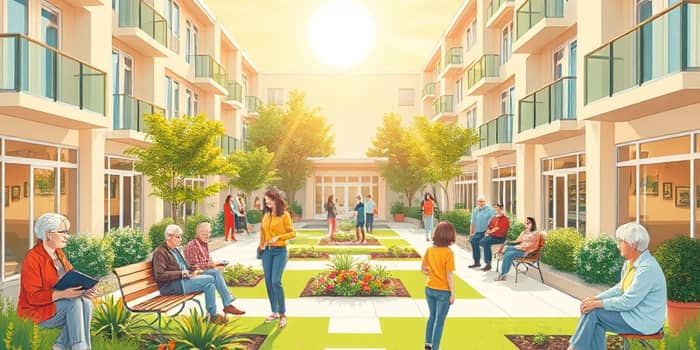
In 2025, the United States senior living market reached a valuation of $112.93 billion and is on an upward trajectory. Strong occupancy rates across primary regions and steady rent growth are underpinning a robust financial landscape. As the sector moves into 2026, stakeholders face both opportunities and challenges. Rising demand driven by demographic shifts is colliding with a widening supply and investment gap. This article explores the forces reshaping senior living, from market trends to strategic imperatives for operators, investors, and communities.
Market Overview & Financial Trends
The senior living sector has demonstrated remarkable resilience, posting a projected Compound Annual Growth Rate of 5.86% through 2033. Independent living occupancy exceeded 90 percent in 2025, while assisted living edged toward pre-pandemic benchmarks. Annual rent escalations have stabilized above 4 percent, supporting healthy operating margins. Transaction volumes surged, reflecting investor confidence. Yet beneath these favorable figures lies a tension between robust performance and looming shortages. Identifying sustainable growth paths is now more critical than ever.
Demographic Forces Shaping Demand
The oldest baby boomers turn 80 in 2026, representing a major demographic inflection. This milestone heralds a sustained influx of older adults seeking supportive lifestyles. States like New York, Illinois, California, North Carolina, and Washington are at the forefront, driven by large aging populations and higher disposable incomes. Enhanced awareness of community benefits has also driven uptake. Providers must adapt offerings to meet evolving expectations, blending independence with tailored health services to capture this vast, emerging segment.
Rising disposable income among seniors empowers many to pursue higher-quality care. Combined with growing social acceptance of communal living, demand for senior communities is entering a decade-long growth runway. Operators that anticipate this wave will be well-positioned to lead a market that prioritizes both comfort and specialized support.
Occupancy & Supply Dynamics
By 2025, senior housing occupancy rates had surpassed historical highs, with independent living communities consistently over 90 percent full. Assisted living, too, is rebounding toward pre-pandemic levels. NIC forecasts the average senior housing occupancy could exceed 90 percent in 2026—the highest rate in two decades of tracking. However, this success masks an emerging imbalance: demand is outstripping supply in many primary markets.
With new construction at historically low levels, existing communities are filling or nearing capacity. Waitlists are expanding, and operators confront the paradox of strong performance alongside unmet needs. While full occupancy boosts revenue, it also indicates potential barriers for older adults seeking timely access to care and lifestyle services.
Investment & Development Gap
The industry faces a structural investment and development gap that threatens long-term viability. To sustain a 90 percent occupancy rate, developers must double historical construction pace annually over the next two decades. Yet, ground-up development remains muted, constrained by high financing costs, regulatory complexity, and operational challenges. In some markets, existing communities are being repurposed or closed faster than new ones emerge, exacerbating the crisis.
This deficit signals both risk and opportunity. Investors can play a pivotal role by funding scalable projects and collaborating with operators. Public-private partnerships may unlock innovative financing models, helping communities expand capacity without compromising quality or affordability.
Product Evolution & Diversification
Developers are diversifying to meet the unique needs of the next generation of residents. Four key product innovations are redefining the landscape:
- Active adult 55+ communities offering social engagement and wellness programs tailored to healthier seniors.
- Single-story cottages and villas with attached garages that provide home-like living with accessible design.
- Hybrid or independent living lite communities that blend autonomy with minimal supportive services.
- Enhanced assisted living and memory care environments featuring larger two-bedroom units and specialized dementia programming.
By tailoring environments to specific wellness levels, operators can attract broader demographics and maximize unit utilization.
Innovation in Care & Technology
Technological advancements are transforming care delivery. Many communities are adopting AI-powered health monitoring and telehealth platforms to enhance safety and reduce costs. Remote patient monitoring tools facilitate early intervention, while data-driven personalized care plans ensure each resident’s preferences and health requirements are met.
Furthermore, the rise of value-based care models is opening new reimbursement channels. These innovative payment structures reward quality outcomes over service volume, aligning incentives for providers and payers. The convergence of advanced analytics and alternative financing is setting the stage for a more responsive, resident-centric approach.
Financial & Strategic Implications
High demand and constrained supply have energized M&A and capital markets. Record transaction volumes in 2025 reflect a robust appetite for senior living assets. Drivers of this activity include cap rate compression, debt maturity management, and portfolio rebalancing. With new construction lagging, existing communities offer value-add opportunities for investors and REITs.
- Cap rate compression boosting asset values
- Portfolio pruning by large operators
- Deferred development fueling acquisitions
Looking ahead, potential interest rate cuts could further accelerate deal-making. Strategic partnerships and roll-up strategies will likely dominate, as larger players consolidate scale and expertise.
Challenges & Future Outlook
Despite positive momentum, the sector must address key constraints to sustain growth. Staffing shortages pose a significant risk to service quality and operational efficiency. Regulatory compliance is becoming increasingly complex, adding to cost pressures. Rising healthcare and living expenses could also limit accessibility for price-sensitive segments.
Addressing these challenges will require creativity and collaboration. Industry leaders should explore workforce development programs, regulatory advocacy, and cost-sharing innovations. Public-private collaboration could enable mid-market offerings that balance quality and affordability.
In the long run, the senior living industry stands at a crossroads. Demographic tailwinds promise years of growth, yet realization of this potential depends on closing the development gap, embracing technology, and forging strategic alliances. Stakeholders who act decisively will not only drive returns but also meaningfully enrich the lives of millions of older adults seeking community, care, and dignity in their later years.
References
- https://www.hmpglobalevents.com/article/five-senior-housing-trends-shaping-industry-2026
- https://seniorhousingnews.com/2026/01/05/top-senior-living-trends-for-2026/
- https://www.datainsightsmarket.com/reports/united-states-senior-living-market-17191
- https://www.pwc.com/us/en/industries/financial-services/asset-wealth-management/real-estate/emerging-trends-in-real-estate-pwc-uli/property-type-outlook/senior-housing.html
- https://www.nic.org/blog/2026-outlook-for-u-s-continuing-care-retirement-communities-ccrcs/
- https://www.directsupply.com/resources/blogs/senior-living-design-trends
- https://www.plantemoran.com/explore-our-thinking/areas-of-focus/senior-living-market-trends
- https://dosepacker.com/blog/senior-living-trends