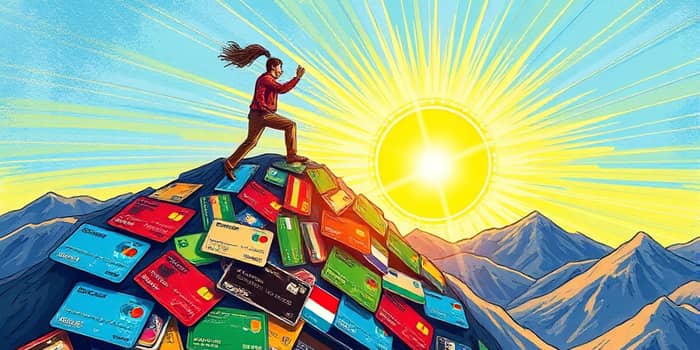
Credit card balances continue to climb, with total U.S. credit card debt reached a record high of $1.277 trillion in Q4 2025. This surge underscores an urgent need for clear, actionable plans to regain control of personal finances and break free from the cycle of high-interest obligations.
Understanding the Credit Card Debt Landscape
Before selecting a repayment strategy, it is essential to grasp the scope of the problem. National averages show credit card debt among cardholders has risen to $7,886, while certain states like Connecticut and New Jersey exceed $9,700 per cardholder. Meanwhile, many consumers carry balances for years, prolonging interest accrual and financial stress.
The persistence of high-interest rates and inflationary pressures means that without deliberate action, balances will continue to grow. Recognizing these trends and their implications sets the stage for a focused, disciplined approach to repayment.
Core Repayment Strategies
Two primary methods dominate the conversation: the Debt Snowball Method and the Debt Avalanche Method. Each offers unique advantages and potential drawbacks depending on individual priorities and psychological preferences.
Debt Snowball Method
The Debt Snowball Method emphasizes smallest balance to largest repayment, aiming to build momentum through quick wins. By eliminating smaller debts early, many users find renewed motivation to continue the payoff journey.
Steps to implement:
- List all cards by balance, from smallest to largest.
- Make minimum payments on every card.
- Apply any extra funds to the smallest balance until it is paid off.
- Roll the freed-up payment amount to the next smallest balance (the “snowball” effect).
Pros: Rapid psychological boosts, easy to track progress, and excellent for those needing builds psychological momentum through quick wins.
Cons: May result in higher overall interest costs if large, high-rate debts are delayed.
Debt Avalanche Method
Conversely, the Debt Avalanche Method focuses on highest interest rate to lowest debts, striving to minimize total interest paid over the repayment horizon. Though progress may feel slower initially, the strategy often saves more money and shortens the payoff timeline.
Steps to implement:
- List debts by APR, from highest to lowest.
- Maintain minimum payments on all obligations.
- Allocate extra funds to the debt with the highest interest rate.
- After payoff, channel total funds to the next highest-rate debt.
Pros: Reduces interest expenses, accelerates debt elimination in the long run, and suits cost-conscious users seeking efficiency.
Cons: Less immediate gratification; high-rate debts may be large, delaying visible progress.
Snowball vs. Avalanche Comparison
Choosing between these two approaches depends on your personality, financial goals, and willingness to endure trade-offs between speed of psychological wins and overall cost savings.
Advanced Tactics to Accelerate Payoff
In addition to core strategies, several tactics can amplify your progress and reduce interest burdens:
- Balance Transfers: Move high-rate balances to a 0% APR promotional card and pay aggressively before the promo period ends; note fees may apply.
- Debt Consolidation Loans: Combine multiple debts into one loan with a lower interest rate, simplifying payments and potentially reducing costs.
- Increase Income Streams: Take on side work or monetize hobbies to generate extra funds for your repayment plan.
- Cut Discretionary Spending: Review monthly subscriptions, dining out, and entertainment budgets to free up cash.
Preparing for Success
Effective repayment begins long before you make your first extra payment. Follow these preparatory steps to ensure you have the clarity and discipline needed:
- Gather all account statements, noting balances, minimum payments, and APRs.
- Create a realistic budget that identifies consistent extra payment capacity without jeopardizing essential expenses.
- Set measurable milestones—months to payoff, interest saved—to track progress and stay motivated.
Overcoming Common Challenges
Many individuals struggle with long-term balances—over 60% have carried debt for more than a year, and over 20% for five years or more. Stagnation can occur due to unexpected expenses, income fluctuations, or lack of discipline.
Strategies to mitigate setbacks:
- Build a small emergency savings buffer to avoid new debt when unexpected costs arise.
- Automate payments to prevent late fees and maintain consistent progress.
- Seek accountability through a trusted friend, financial coach, or online community for motivation and advice.
Measuring Your Progress
Track two key metrics: the remaining balance and cumulative interest saved. Use spreadsheet tools or budgeting apps to visualize your journey. Celebrate each debt payoff milestone with a low-cost reward, reinforcing positive behavior without derailing your budget.
Example metrics:
- Months to fully repay all balances.
- Total interest avoided compared to minimum-payment-only scenarios.
Conclusion
Rising credit card debt presents a significant challenge, but with a clear plan and disciplined execution, you can reclaim control over your financial future. Whether you choose the rapid wins of the Debt Snowball or the cost savings of the Debt Avalanche, pairing these methods with advanced tactics like balance transfers and income growth will accelerate your path to freedom. Start today by gathering your balances, setting realistic budgets, and committing to a method that aligns with your goals and temperament. Your journey out of debt begins with a single extra payment—in time, you’ll look back and see how far you’ve climbed.
References
- https://www.lendingtree.com/credit-cards/study/credit-card-debt-statistics/
- https://www.takechargeamerica.org/credit-debt-payoff-methods/
- https://www.bccu.org/blog/credit-card-debt-the-best-repayment-methods
- https://www.newyorkfed.org/newsevents/news/research/2026/20260210
- https://www.experian.com/blogs/ask-experian/avalanche-vs-snowball-which-repayment-strategy-is-best/
- https://www.newyorkfed.org/microeconomics/hhdc
- https://www.wellsfargo.com/goals-credit/smarter-credit/manage-your-debt/snowball-vs-avalanche-paydown/
- https://www.federalreserve.gov/releases/g19/current/
- https://www.fidelity.com/learning-center/personal-finance/avalanche-snowball-debt
- https://blog.umb.com/debt-strategy-comparison-avalanche-snowball/
- https://www.navyfederal.org/makingcents/credit-debt/debt-repayment-strategies.html
- https://www.nerdwallet.com/personal-loans/learn/pay-off-credit-card-debt