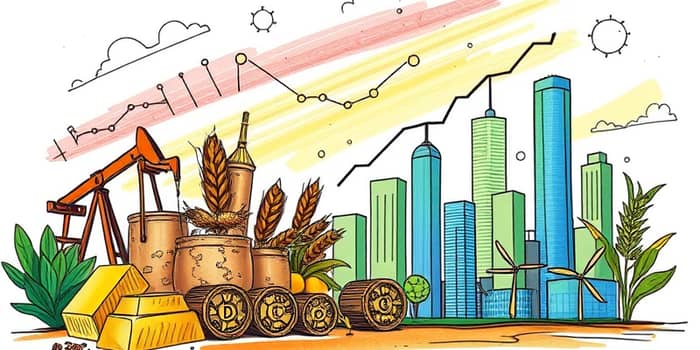
Commodities are the raw materials that fuel global economies, from the energy powering our cities to the metals in our technology.
They offer a unique pathway to growth by diversifying portfolios and hedging against inflation.
Understanding this commodity code can transform how you approach investing in today's dynamic markets.
This article will guide you through the essentials, strategies, and opportunities to harness these assets effectively.
What Are Commodities and Why Do They Matter?
Commodities are basic goods used in consumption or production, categorized into distinct types.
They play a crucial role in global supply chains and economic health.
- Energy commodities: These include oil, natural gas, and coal.
- Metals: Examples are gold, silver, copper, and aluminum.
- Agricultural products: Such as wheat, corn, soybeans, and coffee.
- Others: Livestock and soft commodities like cotton.
Investing in commodities provides exposure to global demand drivers like infrastructure and technological advancements.
This makes them a foundational asset for long-term growth strategies.
The Dual Meaning of the Commodity Code
The term "commodity code" has two key interpretations in finance and trade.
First, it refers to standardized numerical codes for classifying goods in international trade.
These codes simplify customs, tariffs, and logistics for raw materials.
Second, it symbolizes the investment framework or "code" for leveraging commodities.
This includes legal structures for speculative contracts and precious metals trading.
Both aspects are essential for navigating supply chains and maximizing returns.
How to Invest in Commodities: A Comprehensive Guide
There are multiple accessible methods to invest in commodities without physical storage.
Each approach has its own benefits and suitability for different investors.
Choosing the right method depends on your risk tolerance and investment goals.
It's vital to assess each option's potential for growth and volatility carefully.
Advantages of Commodity Investing for Growth
Commodities offer several key benefits that can enhance your portfolio's performance.
They provide diversification by having returns that often differ from stocks and bonds.
- Diversification: Reduces overall portfolio volatility through uncorrelated asset returns.
- Inflation hedge: Commodity prices tend to rise with inflation, preserving purchasing power.
- Exposure to global trends: Taps into demand from infrastructure projects and energy transitions.
- Potential for high returns: Driven by supply and demand dynamics in growing economies.
For example, during periods of economic expansion, commodities like copper may surge.
This makes them a strategic addition for long-term wealth building.
Risks and How to Mitigate Them
While promising, commodity investing comes with inherent risks that require careful management.
Understanding these challenges can help you navigate the markets more effectively.
- Volatility and principal risk: Prices can swing dramatically due to global events and regulations.
- Concentration risk: Funds focusing on one industry may face heightened fluctuations.
- Derivatives risks: Futures and options can diverge from underlying commodity prices.
- Foreign and emerging market exposure: Political instability or currency changes add uncertainty.
- Impact of trade codes: Regulatory changes can affect supply chains and costs indirectly.
To mitigate these, consider diversifying across different commodity types and methods.
Use stop-loss orders or invest through diversified ETFs to spread risk.
The Role of Trade Codes in Commodity Markets
Trade codes, such as HS codes, are critical for the smooth operation of commodity markets.
They streamline imports and exports, ensuring efficient supply chains for raw materials.
This regulatory framework supports investment growth by reducing trade barriers.
- Simplifies logistics: Codes help in classifying goods for customs and tariffs.
- Enhances transparency: Provides clear guidelines for trading and compliance.
- Supports legal investment: Defines commodity contracts for speculation and hedging.
For investors, understanding these codes can offer insights into market efficiencies and risks.
It's a behind-the-scenes factor that influences pricing and availability.
Future Outlook: Tapping into Global Trends
The future of commodity investing is bright, driven by megatrends like AI and renewable energy.
Infrastructure spending and technological advancements will boost demand for raw materials.
- AI infrastructure: Requires metals like copper for data centers and electronics.
- Renewable energy transitions: Increase need for rare earth elements and lithium.
- Global capex cycles: Projects in emerging markets fuel commodity consumption.
Investors can position themselves by focusing on sectors aligned with these trends.
This forward-looking approach ensures your portfolio remains resilient and growth-oriented.
Embrace the commodity code as a strategic tool for building wealth in a changing world.
References
- https://www.fidelity.com/learning-center/investment-products/mutual-funds/about-commodity-investing
- https://www.wallstreetprep.com/knowledge/commodities/
- https://www.poems.com.sg/glossary/commodity/commodities-index/
- https://www.moneyfarm.com/uk/glossary/commodities/
- https://kb.uconn.edu/space/FPB/27713142882
- https://www.unisco.com/freight-glossary/commodity-code
- https://swoopfunding.com/ca/business-glossary/commodity-code/
- https://www.gov.uk/guidance/finding-commodity-codes-for-imports-or-exports