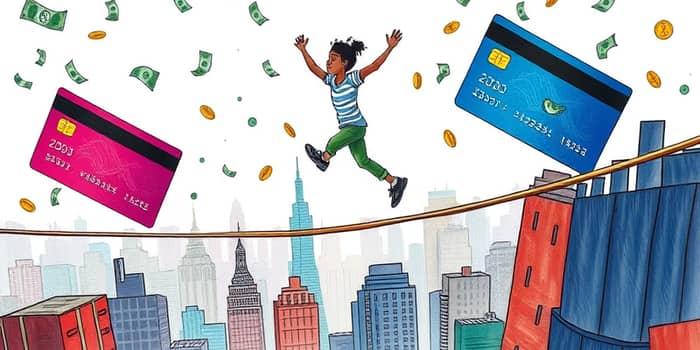
In today’s economy, credit cards and loans offer promises of immediate gratification and convenience. But behind the swipe of a card and the click of an online loan application lies a web of potential pitfalls. Overextending credit can threaten not only personal finances, but also emotional well-being and long-term goals.
By exploring powerful statistics, real-world examples, and expert insights, this article aims to empower readers with financial resilience and intentional decision-making. You will discover how to recognize danger signals, understand root causes, and implement practical strategies to stay on stable ground.
Understanding the Scale of Credit Overextension
The magnitude of consumer credit in the U.S. has soared to historic highs. As of Q3 2025, credit card balances reached $1.23 trillion in Q3 2025, an increase of $20 billion from the previous quarter. Projections suggest balances may climb to $1.18 trillion by the end of 2026, signaling persistent reliance on revolving debt.
Although annual growth has slowed—forecasted at a modest 2.3% compared to double-digit surges in 2022 and 2023—this remains the smallest annual increase since 2013 (excluding pandemic-driven anomalies). Yet slow growth does not equal stability when absolute debt levels remain unprecedented.
Root Causes and Contributing Factors
Credit overextension seldom results from a single misstep. A combination of economic pressures, shifting consumer behaviors, and structural issues can drive individuals into precarious situations. Identifying these factors is the first step toward prevention and recovery.
- Economic pressures: Persistent inflation at 2.45% and rising interest rates erode purchasing power, pushing households to borrow more.
- Consumer behavior: Some individuals fall into the trap of living beyond their means, while rewards cards lure students without full awareness of fees.
- Structural issues: The harsh student loan reporting system and regulatory barriers to credit repair compound existing challenges, leaving vulnerable borrowers exposed.
Even as many households exhibit cautious spending and measured credit management, a significant minority continue practices that risk spiraling into deeper debt. Recognizing patterns—such as carrying over balances each month or relying on minimum payments—is essential for intervention.
Consequences for Individuals and Communities
Overextended credit has profound repercussions that extend beyond the balance sheet. Individuals may face stress, anxiety, and erosion of self-esteem when bills accumulate. Communities can suffer when local economies slow due to widespread financial distress.
Delinquency rates provide a stark picture of strain across loan categories:
Generation Z stands out as particularly vulnerable. Recent studies show 15.1% of Gen Z borrowers have maxed out credit cards, compared to 12.3% of millennials. Regional disparities also emerge: Missouri’s average credit score fell to 654, a 1.51% decline—the largest drop nationwide.
The Private Credit Landscape and Systemic Implications
Beyond traditional banks and credit cards, private credit has ballooned into a $3 trillion market as of early 2025, up from $2 trillion in 2020. Projections estimate growth to $5 trillion by 2029.
While this expansion unlocks capital for businesses and investors, it also introduces risk: higher delinquency rates among subprime borrowers and concentration of non-bank financial institution lending, which now represents over 10% of total bank lending.
History shows that unchecked credit growth can amplify financial shocks. Although current private sector debt-to-GDP ratios remain below the peaks before the 2008 crisis, late-cycle risks—high rates, persistent inflation, and rapid private credit growth—demand vigilance.
Practical Steps to Regain Control
Empowerment begins with action. By adopting clear strategies, you can navigate credit challenges, rebuild strength, and avoid common pitfalls:
- Create a realistic budget that prioritizes essentials and allocates specific funds for debt repayment.
- Focus on paying more than the minimum due to reduce principal faster and limit interest costs.
- Negotiate interest rates and payment plans with creditors; many lenders can offer hardship programs or lower rates.
- Build an emergency fund to prevent reliance on credit when unexpected expenses arise.
- Seek guidance from certified credit counselors who can tailor plans to your circumstances.
Consistency is crucial. Small, regular payments above the minimum can shorten payoff timelines significantly and restore credit health over time.
Remember that the goal is sustainable improvement, not quick fixes that might mask deeper issues. Embrace transparent tracking tools and hold yourself accountable by reviewing statements monthly.
Building Resilient Credit Habits for the Future
Long-term resilience hinges on disciplined credit choices and continuous education. Consider setting personal guidelines, such as limiting credit utilization to less than 30% of available limits and avoiding impulsive borrowing.
Leverage online resources, workshops, and community programs to strengthen financial literacy. Awareness of local regulations and consumer protections can also safeguard against predatory practices.
On an institutional level, encouraging lenders to maintain maintain disciplined underwriting standards and proactive risk management helps stabilize the broader ecosystem. Advocacy for transparent reporting and fair credit repair practices can empower more consumers.
Ultimately, each person holds the power to transform their credit journey. By embracing financial stability and long-term security as guiding principles, you can weather economic storms and achieve personal goals with confidence.
The dangers of credit overextension are real, but they are not insurmountable. With awareness, practical strategies, and a commitment to healthy habits, it is possible to break free from debt cycles and build a foundation for lasting prosperity.
As the economic landscape evolves, stay informed, stay vigilant, and remember that every responsible decision—no matter how small—can push you closer to a debt-free future.
References
- https://newsroom.transunion.com/2026-consumer-credit-forecast/
- https://www.prnewswire.com/news-releases/percent-releases-2026-private-credit-outlook-growth-continues-as-scrutiny-intensifies-302662163.html
- https://news.unl.edu/article/study-shows-firms-remain-disciplined-even-when-credit-becomes-abundant
- https://www.foxbusiness.com/personal-finance/credit-scores-plummet-across-multiple-states-creating-perfect-storm-american-wallets-expert-says
- https://lbcurrent.com/news/2026/01/20/what-does-the-fall-of-credit-scores-nationwide-mean-for-college-students/
- https://www.moodys.com/web/en/us/insights/credit-risk/outlooks/credit-conditions-2026.html
- https://www.youtube.com/watch?v=1s4kSpMPTdw
- https://www.withintelligence.com/insights/private-credit-outlook-2026/
- https://www.ssga.com/nz/en_gb/institutional/insights/2026-credit-research-outlook
- https://www.nerdwallet.com/finance/studies/2026-consumer-outlook-report