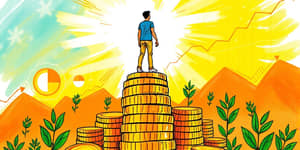
Imagine a world where every adult wakes up with the security of a steady monthly check—enough to cover essentials, explore dreams, and weather economic change. Andrew Yang’s Freedom Dividend proposes just that: a bold universal basic income (UBI) of $1,000 per month for every U.S. citizen aged 18 to 64. At its heart, this plan is more than a policy; it is choose to invest in yourself each month.
Far from an abstract proposal, the Freedom Dividend is rooted in centuries of economic thought and designed to meet the challenges of the 21st century. As automation transforms industries and traditional safety nets strain, UBI offers an innovative path forward—one that empowers individuals and fortifies communities.
Understanding the Freedom Dividend
The concept of giving each person a guaranteed income traces back to Renaissance humanists and Thomas Paine’s proposal of a “natural inheritance.” Nobel laureates like Milton Friedman and F.A. Hayek refined it through ideas such as the negative income tax. Yang reimagined these principles for today’s economy by proposing an unconditional $1,000 monthly payment, adjusted for inflation, to cover basic living expenses.
Proponents argue that a universal monthly stipend can cover basic needs for every citizen, reduce poverty, and strengthen worker bargaining power. By untethering survival from employment, the Freedom Dividend offers a chance to respond creatively to disruptions—whether from global recession or rapid automation.
Funding a New Foundation
Critics often ask: how do we pay for it? The Freedom Dividend’s designers estimate a gross cost of $2.8 trillion annually. To offset this, the plan reallocates existing welfare dollars—saving $133 billion—and introduces new revenue streams that include a 10% value-added tax and reforms to capital gains and payroll taxes.
Combined, these measures generate approximately $1.4 trillion in net new revenue. While this represents a significant fiscal commitment, the plan’s advocates highlight potential economic growth, increased consumer spending, and administrative savings from simplified welfare programs.
Economic models differ on net impact: optimistic forecasts from the Roosevelt Institute suggest up to 12% GDP growth and millions of new jobs, while Penn-Wharton’s analysis warns of potential slowdowns if labor supply falls. Yet even cautious projections affirm that UBI can serve as stability against automation-driven job losses and forge a more resilient economy.
Empowering Individuals: How to Invest in Yourself
More than a policy mechanism, the Freedom Dividend is an invitation to reclaim personal agency. With a guaranteed baseline, people can pursue opportunities without the constant pressure of making ends meet. This igniting creativity and entrepreneurial boldness ethos lies at the core of the plan’s promise.
- searching for new career paths without financial fear
- launching a small business without hefty start-up costs
- pursuing higher education or vocational training
- dedicating time to caregiving for loved ones
Evidence from pilot programs and economic experiments shows that recipients often invest in skill development and community engagement. Far from fostering idleness, a basic income can enhance labor market flexibility and raise overall productivity.
Real-World Impacts and Future Outlook
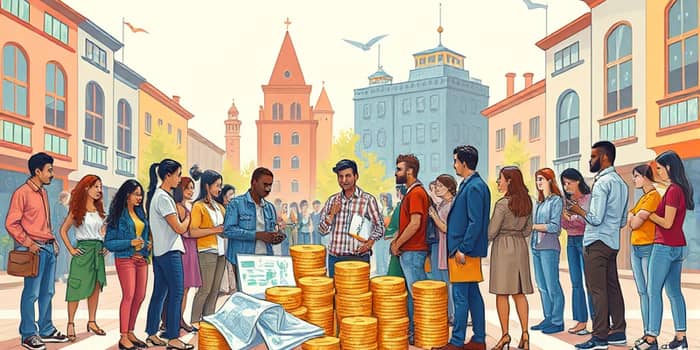
In small communities, UBI injections translate into tangible spikes in local spending. A town of 5,000 residents, for instance, could see an extra $60 million annually circulating through shops, services, and housing markets, driving local growth and job creation.
Moreover, reductions in poverty statistics are dramatic: analyses predict a 74% drop in overall poverty and a 54% decline in child poverty. When families have the means to meet essential needs, they participate more fully in education, health care, and civic life—lifting entire communities through shared prosperity.
- potential reduction in labor supply due to guaranteed income
- regressive impacts of consumption taxes on lower-income individuals
- risks of increased deficits if growth projections fall short
While no policy is without trade-offs, the Freedom Dividend’s advocates argue that its benefits—both immediate and long-term—outweigh the risks. By simplifying bureaucracy and offering a clear, universal benefit, it can reduce administrative overhead and stigma associated with traditional welfare.
Choosing Hope and Action
The Freedom Dividend represents more than a financial guarantee; it embodies a fair and equitable social contract for a rapidly changing world. It invites us to imagine an economy where security fuels innovation, where basic dignity empowers ambition, and where prosperity is shared rather than hoarded.
As automation continues to reshape the workforce, we face a choice: cling to outdated safety nets or embrace a system designed for the future. By supporting the Freedom Dividend, communities can ensure that no one is left behind, unlocking human potential on a grand scale.
Whether you are an entrepreneur, a caregiver, a creative, or someone seeking new horizons, the Freedom Dividend offers a springboard. It’s time to take that leap, to believe in collective empowerment, and to build an economy where every person has the freedom to invest in themselves.
References
- https://www.ubicenter.org/distributional-analysis-of-andrew-yangs-freedom-dividend
- https://basicincome.org/topic/freedom-dividend/
- https://2020.yang2020.com/what-is-freedom-dividend-faq/
- https://progressandpovertyinstitute.org/what-happened-to-the-freedom-dividend/
- https://www.ubiworks.ca/research
- https://digitalcommons.unomaha.edu/cgi/viewcontent.cgi?article=1079&context=university_honors_program
- https://hai.stanford.edu/news/radical-proposal-universal-basic-income-offset-job-losses-due-automation
- https://www.catalystproject.net/blogus/a-quick-guide-to-andrew-yangs-freedom-dividend
- https://cedars.cedarville.edu/2019/10/the-freedom-dividend/
- https://usbig.net/yangs-freedom-dividend-whats-it-got-to-do-with-freedom/