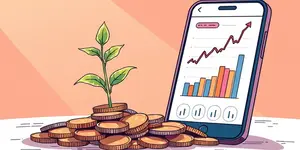
Imagine a force so powerful that it can turn modest savings into vast fortunes, simply by harnessing the passage of time. This force is compound interest, often hailed as the eighth wonder of the world by financial enthusiasts and experts alike.
At its core, compound interest is the interest calculated not only on your initial investment but also on all the interest that has been added over time. This creates a snowball effect where your wealth grows exponentially, accelerating with each compounding period.
The key to unlocking this potential lies in understanding its mechanics and applying them consistently. Time is your greatest ally in this journey, and starting early can make all the difference.
Understanding Compound Interest
Compound interest is fundamentally different from simple interest, which only applies to the principal amount. With compound interest, earnings are reinvested, leading to growth on growth.
The standard formula to calculate the final amount is A = P(1 + r/n)^(nt), where P is the principal, r is the annual interest rate, n is the compounding frequency, and t is the time in years.
This formula might seem complex, but it encapsulates the magic of compounding. For instance, if you invest $1,000 at an annual rate of 5%, compounded annually, after the first year you have $1,050.
In the second year, interest is calculated on $1,050, not just $1,000, resulting in $1,102.50. This incremental increase might seem small at first, but over decades, it transforms into significant wealth.
The Key Drivers of Exponential Growth
Several factors influence how quickly your money compounds. Understanding these can help you optimize your strategy.
- Time: The longer your money compounds, the greater the effect. Starting early, even with small amounts, can lead to astonishing results due to the exponential nature of growth.
- Interest Rate: Higher rates accelerate growth. Historical averages for stock market investments, such as index funds, hover around 7-8% annually, offering a robust platform for compounding.
- Compounding Frequency: More frequent compounding yields higher effective rates. Daily compounding, for example, grows your money faster than annual compounding, as interest is added more often.
- Regular Contributions: Consistently adding to your investments supercharges growth. This practice, known as dollar-cost averaging, allows you to buy more when prices are low and less when they are high, smoothing out market volatility.
- Reinvestment: Keeping all earnings invested maintains the snowball effect. Whether it's dividends from stocks or interest from bonds, reinvesting ensures that your money continues to work for you.
Compound vs. Simple Interest: A Clear Comparison
To appreciate the power of compounding, it's essential to compare it with simple interest, which offers linear growth.
As the table shows, even small differences in interest calculation can lead to significant disparities over time, especially with longer horizons.
Real-Life Examples to Inspire You
Theoretical knowledge is one thing, but seeing compound interest in action through real-world scenarios can be truly motivating.
- Warren Buffett-inspired: Investing $500 per month from age 22 at a 7% return for 40 years can grow to approximately $1.2 million. This demonstrates how consistency and time can build substantial wealth.
- Early vs. Late Start: If you start investing $200 per month at age 25 with an 8% return until age 65, you might accumulate around $698,000. However, starting just ten years later at age 35 reduces the total to about $298,000, highlighting the critical importance of beginning early.
- One-Time Investment: A single investment of $5,000 at 5% interest, compounded monthly for 10 years, can yield $3,235 in interest, bringing the total to approximately $8,235.
- 401(k) Example: Contributing $5,000 annually to a 401(k) with a 7% return over 30 years can grow to roughly $472,000. Tax-advantaged accounts like these are excellent vehicles for compounding.
- Debt Pitfall: On the flip side, $50,000 in student loans at 7% interest with low monthly payments can cause the balance to balloon due to compounding interest on unpaid amounts. This underscores the need to manage debt aggressively.
Practical Tools and Strategies
To harness compound interest effectively, you need the right tools and a solid strategy.
One useful rule is the Rule of 72, which helps estimate how long it takes for your investment to double. Divide 72 by the annual interest rate; for example, at 8%, it takes about 9 years.
- Start Early and Consistently: The sooner you begin, the more time your money has to grow. Even small, regular contributions can lead to significant outcomes over decades.
- Use Tax-Advantaged Accounts: Accounts like 401(k)s, IRAs, and Roth IRAs allow your investments to grow tax-deferred or tax-free, maximizing compounding. Always capture employer matches in 401(k) plans, as it's essentially free money.
- Invest in Broad Index Funds: Historical data shows that index funds, such as those tracking the S&P 500, offer average returns of around 8% annually. This provides a reliable base for compounding without the need for stock-picking expertise.
- Practice Dollar-Cost Averaging: By investing fixed amounts regularly, you buy more shares when prices are low and fewer when high, reducing risk and enhancing long-term growth.
- Avoid Withdrawals: To keep the compounding effect intact, resist the temptation to withdraw earnings. Reinvest all dividends and interest to maintain the snowball rolling.
The Dark Side: Compound Interest and Debt
While compound interest is a boon for savers and investors, it can be a bane for borrowers. Here are key points to consider:
- High-Interest Debt: Credit cards and loans with high rates cause balances to balloon. Interest compounds on unpaid amounts, making it harder to pay off.
- Minimum Payments: Making only minimum payments can lead to growing debt. For example, a $50,000 student loan at 7% with low payments might increase over time.
- Aggressive Repayment: To counteract this, pay more than the minimum and target high-interest debt first. This reduces the compounding effect working against you.
Lessons from the Masters
Warren Buffett, one of the world's most successful investors, attributes a significant portion of his wealth to the power of compound interest. He started investing at age 11 and emphasizes that time is the key asset.
Buffett has said that about 90% of his wealth was accumulated after age 60, showcasing how compounding can work wonders over long periods. His story inspires us to be patient and persistent.
Other financial experts echo this sentiment, urging individuals to leverage compounding through disciplined saving and investing from an early age.
Start Your Journey Today
To begin harnessing compound interest, follow these steps:
- Assess Your Finances: Review your savings, investments, and debts. Identify areas where you can start or increase contributions.
- Set Up Automatic Investments: Use automated transfers to invest regularly. This ensures consistency and takes advantage of dollar-cost averaging.
- Choose the Right Accounts: Opt for tax-advantaged accounts like IRAs or 401(k)s. Maximize employer matches if available.
- Stay Informed: Educate yourself on investment options and market trends. But remember, long-term consistency beats short-term timing.
- Be Patient: Compounding takes time, so stay committed to your plan. Avoid emotional decisions based on market fluctuations.
Embrace the journey, and watch as your wealth accelerates. The power is in your hands—start compounding today.
References
- https://en.wikipedia.org/wiki/Compound_interest
- https://www.nasaa.org/investor-education/young-adult-money-mission/compound-interest-2/
- https://www.fidelity.com/learning-center/trading-investing/compound-interest
- https://www.kiplinger.com/kiplinger-advisor-collective/compound-interest-turns-small-investments-into-big-wealth
- https://www.pnc.com/insights/personal-finance/save/what-is-compound-interest.html
- https://www.getevolved.com/how-compound-interest-works/
- https://www.securian.com/insights-tools/articles/how-compound-interest-works.html
- https://heygotrade.com/en/blog/the-power-of-compounding-what-is-it
- https://www.investor.gov/additional-resources/information/youth/teachers-classroom-resources/what-compound-interest
- https://www.ukfcu.org/blog/the-power-of-compound-interest
- https://www.consumerfinance.gov/ask-cfpb/how-does-compound-interest-work-en-1683/
- https://www.southside.com/blog/post/compounding-interest/
- https://www.youtube.com/watch?v=WgVPgNFgrAo
- https://www.sequoia-financial.com/insights/the-power-of-compound-interest-one-of-your-allies-in-building-long-term-wealth/
- https://www.fiducientadvisors.com/blog/the-power-of-compounding-how-time-can-be-your-best-investment-ally