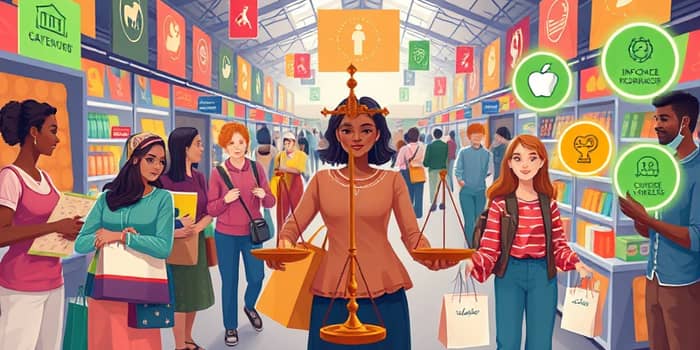
Every transaction you make is more than just an exchange of goods or services; it is an opportunity to assert your dignity and ensure fairness in a global economy.
Consumer rights are your legal entitlements and protections, designed to shield you from exploitation and promote a balanced marketplace where trust thrives between buyers and sellers.
From their origins in the mid-20th century, these rights have evolved into a powerful framework that empowers individuals to demand quality, transparency, and accountability in every purchase.
The Core Definition and Purpose of Consumer Rights
At their heart, consumer rights are legal mechanisms that ensure individuals receive fair treatment when buying goods or services.
They promote a balanced marketplace where businesses are held accountable for their actions, fostering trust and economic stability.
These rights originated in the 1950s and 1960s, with early recognition in places like Britain and Denmark.
The movement was popularized globally by U.S. President John F. Kennedy's 1962 Consumer Bill of Rights, which initially outlined four fundamental principles that have since expanded.
Universal Key Consumer Rights You Must Know
Across most jurisdictions, certain rights form the foundation of consumer protection, ensuring you can shop with confidence and security.
These rights are consistently upheld to prevent unfair practices and provide remedies when things go wrong.
- Right to Safety: Protection against hazardous goods or services that risk life, health, or property, ensuring products meet both immediate and long-term needs.
- Right to be Informed: Access to full details on quality, quantity, potency, purity, standards, and price to avoid deceptive practices and make wise decisions.
- Right to Choose: Ability to select from a variety of goods or services at competitive prices, with fair quality even in monopolistic markets.
- Right to be Heard: Ensuring your interests are considered in policy forums and that you have representation in consumer welfare bodies.
- Right to Redress: Remedies for unfair practices, such as refunds, repairs, or replacements, through accessible legal mechanisms.
To further clarify, here is a table summarizing these primary rights with key details.
How Consumer Rights Evolved: Historical Milestones
The journey of consumer rights is marked by significant milestones that have shaped today's protections, inspiring global movements for fairness.
- 1962: President John F. Kennedy introduces the Consumer Bill of Rights with four core principles
- Later Expansions: President Nixon adds the right to redress as the fifth fundamental right, broadening the scope of consumer protections.
- 1960s Onward: Spread of consumer rights globally, with laws like the Fair Credit Reporting Act and Truth in Lending Act in the U.S.
- Modern Additions: Inclusion of rights to education, service, and a healthy environment, reflecting evolving societal values.
These developments underscore the ongoing effort to balance marketplace dynamics and empower individuals against corporate overreach.
Global and Regional Frameworks for Consumer Protection
Consumer protection varies worldwide, but international organizations work to harmonize standards and ensure enforcement across borders.
Statistics show that 77% of countries have a Consumer Protection Act, with higher adoption in middle-income countries at 90%.
- UNCTAD World Consumer Protection Map: Tracks global law and policy status to provide indicators and insights.
- Consumers International (CI): A global federation that reports on protection efforts and advocates for consumer welfare.
- OECD: Reviews laws and promotes uniform protections to enhance cross-border cooperation.
- International Consumer Protection and Enforcement Network: Coordinates enforcement among over 40 countries, mostly from the OECD.
- EU Frameworks: Includes the CPC Regulation and Directives against unfair practices like greenwashing, with updates enhancing coordination.
Real-World Examples Across Countries
Different nations implement consumer rights in unique ways, offering lessons on effective protection and enforcement.
From Australia's focus on greenwashing to Brazil's shift in proof burdens, these examples highlight the diverse applications of consumer laws.
- Australia: Uses the Australian Consumer Law to target deceptive environmental claims, with the ACCC leading climate litigation efforts.
- Brazil: Enforces the Consumer Protection Code, which shifts proof burdens in environmental cases to protect consumers from corporate harm.
- Italy: Relies on the Consumer Code and civil principles to combat issues like greenwashing, ensuring transparency in marketing.
- Japan: Allows injunctions and damages through certified organizations, though climate cases are still emerging.
- Kenya: Protects consumers via constitutional provisions against both public and private violations.
Emerging Topics: Greenwashing and Modern Challenges
In today's world, consumer rights face new challenges, such as greenwashing and privacy concerns, requiring vigilance and adaptation.
Greenwashing involves deceptive environmental claims and is prohibited under laws in Australia, the EU, and Poland, with fines up to 10% of turnover.
- Climate Litigation: Increasingly used in countries like Australia and Brazil to hold companies accountable through consumer laws.
- Privacy and Data Protection: Includes the right to reject data sharing and protection from intrusive technologies and marketing tactics.
- Consumer Responsibilities: Balance rights with duties, such as honest dealing and reporting issues without abuse, to foster a respectful marketplace.
These issues emphasize the need for ongoing education and advocacy to keep pace with technological and environmental changes.
Statistics and Governance Insights
Understanding the broader landscape of consumer protection involves looking at adoption rates, enforcement mechanisms, and future trends.
Globally, 77% of countries have Consumer Protection Acts, with enforcement including fines, injunctions, and collective actions.
- Global CPA Adoption: 77% overall, with 90% in middle-income countries showing strong commitment to consumer welfare.
- Enforcement Mechanisms: Examples include Poland's fines for greenwashing and the EU's Representative Actions Directive, effective from 2023.
- Future Directions: Emphasis on international cooperation and digital rights to address emerging threats in the online marketplace.
By staying informed and proactive, you can leverage these rights to build a fairer economic system and inspire positive change in your community.
References
- https://www.easyllama.com/definitions/consumer-rights
- https://www.biicl.org/global-toolbox-1e-8-country-summaries
- https://consumeraffairs.gov.in/pages/consumer-rights
- https://www.nyulawglobal.org/globalex/international_law_consumer_protection1.html
- https://fiveable.me/key-terms/marketing/consumer-rights
- https://www.mass.gov/info-details/consumer-bill-of-rights
- https://unctad.org/topic/competition-and-consumer-protection/consumer-protection-map
- https://www.aces.edu/blog/topics/business-community-urban/know-your-consumer-rights-and-responsibilities/
- https://www.ftc.gov/policy/international/international-consumer-protection-privacy
- https://policybook.aarp.org/policy-book/consumer-rights-and-protection/aarp-consumer-rights-and-protection-principles
- https://legalinstruments.oecd.org/en/instruments/OECD-LEGAL-0303
- https://study.com/academy/lesson/five-major-consumer-rights.html
- https://www.sozialministerium.gv.at/en/Topics/Consumer-Protection/Consumer-Policy/European-and-international-consumer-policy-.html