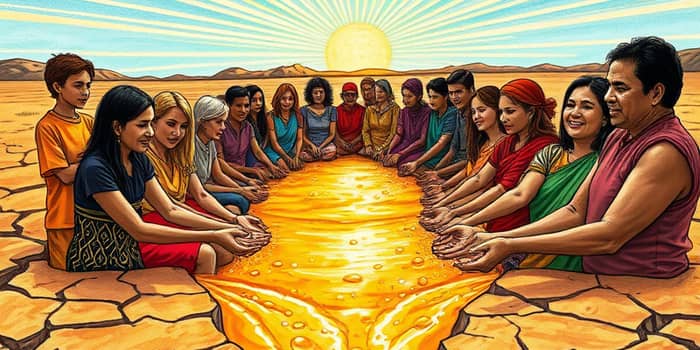
In a world facing unprecedented water scarcity, the battle for access and equity has never been more urgent. Water rights stand at the crossroads of human survival and environmental stewardship, demanding collective action.
As communities grapple with dwindling supplies, innovative policies, grassroots initiatives, and a shared sense of responsibility can pave the way toward a sustainable water future.
Global Water Crisis: Alarming Trends
More than 4.4 billion people lack safely managed drinking water, while nearly 75% of humanity lives in water-insecure regions. Glaciers are retreating, aquifers are depleting, and lakes are drying up at an unprecedented pace.
The term water bankruptcy has emerged to describe systems where withdrawals exceed natural replenishment, causing irreversible losses of critical reserves. With half of the world’s large lakes losing water since the 1990s, the stakes could not be higher.
Human and Environmental Drivers
Multiple factors converge to intensify the crisis. A booming population heightens demand, while intensive agriculture practices deplete groundwater reserves. Rapid urbanization and industrial growth add further pressure.
Climate change acts as an exacerbator, bringing unpredictable rainfall patterns, extended droughts, and catastrophic floods. The combination of human activity and environmental shifts fuels a vicious cycle of scarcity and vulnerability.
- Over-allocation of surface and groundwater resources
- Deforestation and land degradation reducing natural storage
- Pollution from industry and agriculture contaminating sources
- Salinization affecting millions of hectares of farmland
Socioeconomic Impacts
Water scarcity is not just an environmental concern; it is a profound economic and social challenge. Droughts cost the global economy over US$307 billion annually, undermining food security and fueling conflict over scarce resources.
Smallholder farmers, Indigenous communities, and low-income urban residents bear the brunt of these shortages, often forced to spend hours daily collecting water or to pay inflated prices for unsafe supplies.
Gender equality is also at risk. Women and girls in many regions shoulder the burden of water collection, limiting access to education and economic opportunities. Recognizing water as a human right is inseparable from advancing gender equality and empowerment.
Regional Hotspots: A Snapshot
Three-quarters of humanity lives in regions experiencing net freshwater loss, including some traditionally water-rich nations like Canada and the United States.
Empowering Change: Solutions and Best Practices
Tackling the water crisis requires a multi-pronged approach that blends policy reform, technology, and community engagement. By elevating water from a commodity to a shared right, societies can foster resilience and harmony.
- Adopt integrated water resources management for coordinated planning
- Invest in water-smart agriculture to optimize irrigation efficiency
- Enhance monitoring and data-sharing for transboundary cooperation
- Promote rainwater harvesting and wastewater reuse at the community level
- Support capacity-building and equitable decision-making in vulnerable areas
Emerging technologies, such as precision sensors and AI-driven analytics, can revolutionize how we track supply and demand. Yet technology alone is insufficient without strong governance frameworks that prioritize equitable access to water.
A Call to Action
World Water Day 2026 and the upcoming UN Water Conference in Dakar present critical opportunities to reset global priorities. Civil society, governments, and the private sector must unite under the banner of a “Water Action Decade” to achieve Sustainable Development Goal 6 by 2030.
Beyond high-level commitments, local leadership and community-driven initiatives will determine success on the ground. From village water councils to urban water audits, ordinary citizens can contribute to a collective movement for lasting water stewardship.
The journey ahead will be challenging, but the alternative—widespread water bankruptcy and social upheaval—is unacceptable. By treating water as the precious resource it truly is, we can secure not only our own futures but those of generations to come.
Let us embrace the vision of water as liquid gold: a shared heritage to be preserved, cherished, and distributed with fairness and foresight. The survival of ecosystems, economies, and human dignity depends on the choices we make today.
References
- https://www.greenmatch.co.uk/blog/global-water-access-and-quality
- https://worldpopulationreview.com/country-rankings/countries-with-water-scarcity
- https://abcnews.go.com/International/planet-entered-era-water-bankruptcy-new-report/story?id=129422093
- https://phys.org/news/2026-01-aging-populations-global.html
- https://unu.edu/inweh/news/world-enters-era-of-global-water-bankruptcy
- https://phys.org/news/2026-01-world-era-global-bankruptcy-scientists.html
- https://www.unesco.org/en/articles/united-nations-world-water-development-report-2026
- https://healthpolicy-watch.news/world-enters-new-era-of-water-crisis-un-says/
- https://www.un.org/en/global-issues/water
- https://www.unwater.org/news/%E2%80%98where-water-flows-equality-grows%E2%80%99-world-water-day-2026-campaign-launches